ABOUT OUR CO-FOUNDERS' HISTORY
ABOUT MR. SUWANDI MULJADI'S SIDE :
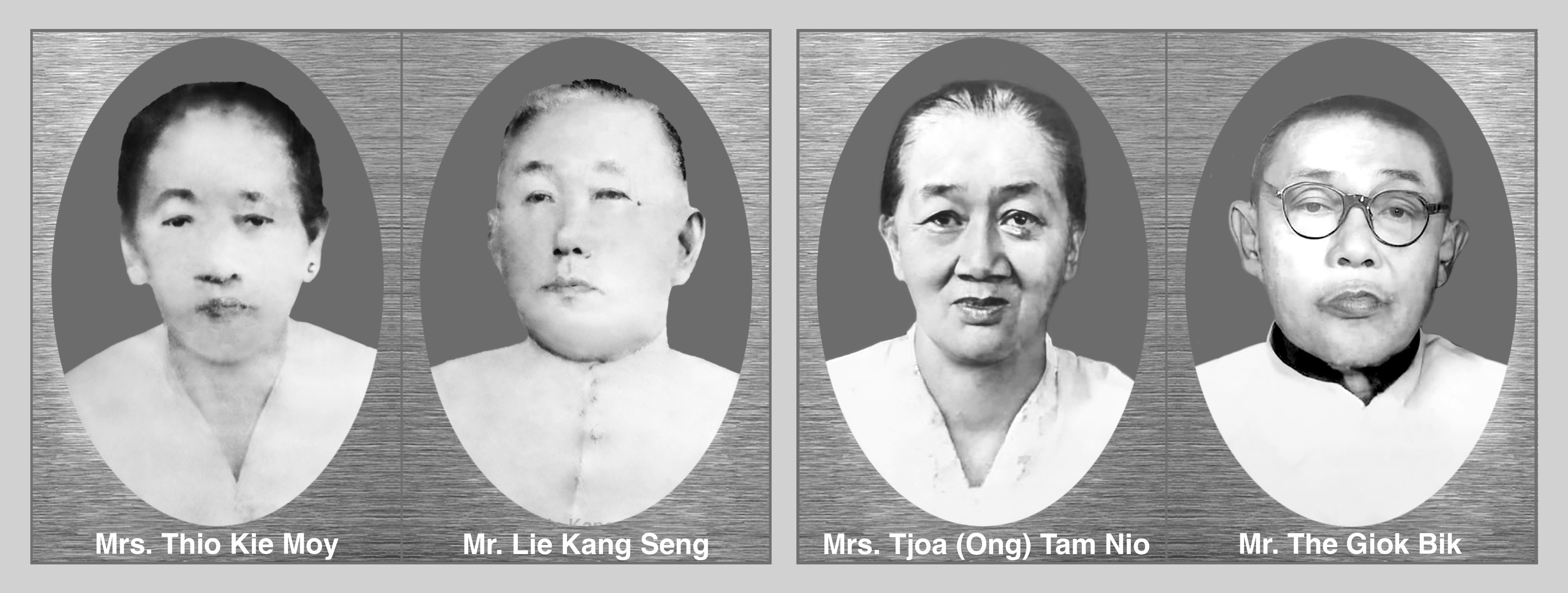
Mr. Suwandi Muljadi spent his childhood living at Jalan Kebon Sirih Barat V/2, Jakarta Pusat, located 3 meter behind the large family house at Jalan Kebon Sirih Raya No. 51, Jakarta Pusat.
Between 1966–1969, Mr. Suwandi Muljadi’s late father (1922-1977) made an informal 50-50 joint cooperation agreement with a friend. With fewer than 100 supervisors and project workers (experienced in building and renovation of private houses), they handled projects for dozens of luxurious private homes in the newly developing Kebayoran Baru area (Jalan Galuh, Daksa, Daha, Sriwijaya, Brawijaya, Adityawarman, Senopati, and many others).
Kebayoran Baru was the first satellite city in Indonesia that was formerly located outside Jakarta – it’s planning and development process by CSW began since end of 1940s. Now, 70-80 years later, Kebayoran Baru has become one of the most elite and expensive areas in Indonesia – second only to Menteng (for certain area in the current Kebayoran Baru, they are even on par with, or better than Menteng), another prestigious neighbourhood originally developed during the Dutch colonial rule in the early 20th century as the "weltevreden” area meaning 'satisfactory' in Dutch".
His late father was also a talented self-made mechanic who opened a Service Center for 'Lambretta motor scooter (Made in Italy)' and also for 'Solex motorcycle (a French/Italian Company)' in the early 1960s (*). Later in the early 1970s, his father started a business to couple and service the 'AEG Electric Motor' and 'KSB Water Pump' (both Made in West Germany). He was authorized/appointed to handle various and many job orders of this kind by PT Guna Electro, the Sole Agent/Exclusive Distributor of AEG-KSB products in Indonesia at the time – At that time, PT Guna Electro captured 70%-80% of the market shares in Indonesia for various water pumps for government buildings, high-rise buildings, commercial buildings, factories, public works etc. thanks to the rapidly growing demand during the early stages of the country’s development, fueled by capital inflows from Western blocs.
Mr. Suwandi Muljadi's mother, the late Mrs. Lie P.M. (1918-1995), was a housewife and had a local Dutch Secondary School background. Despite this, before marrying his father, his mother worked as a freelance translator for many Dutch colonial officers and local businessmen, being fluent in Dutch, Indonesian, and the Hakka dialect. She also had an amazing talent in creating great food recipes and cooking a wide variety of delicious dishes. According to Mr. Suwandi Muljadi, his late mother's home-cooked meals is the best and most unforgettable personal dining experience during his entire life.
Mr. Suwandi Muljadi's paternal grandmother, the late Mrs. Tjoa Kiem Nio (**) (also later known as Mrs. Tjoa (Ong) Tam Nio) and her husband, the late Mr. The Giok Bik, moved from Kudus to Semarang after their marriage and settled down and resided at Jalan Mataram No.771, Jomblang. Later in the year 1950, Mr. Suwandi Muljadi's parents, Mr. The Thiam Sing (also known as Mr.The Ing Koei) & his wife, decided to move from Semarang to Jakarta after their marriage in 1949
Mrs. Tjoa (Ong) Kiem Nio’s older brother, the late Mr. Tjoa Kang Hay, was the father-in-law of the late Mr. Ko Djee Siong and the late Mr. Tan Djing Thay. Both were co-founders of the Nojorono/Minak Djinggo clove cigarette factory, established in 1932 in Kudus, Central Java, Indonesia. This factory is currently one of the five largest cigarette manufacturers and exporters in the country, alongside the Djarum cigarette factory, which is also located in Kudus. The major owners of Djarum cigarrete business also own the major shares and are the controlling interests in BCA (Bank Central Asia), the current largest private bank in Indonesia.
Mr. Suwandi Muljadi's late maternal great-grandfather, Mr. Lie Kong Foek (Asie), was the patriarch of Lie Family in Indonesia. He moved from China and settled down in Indonesia (***), eventually becoming an Indonesian citizen and also the first generation of Chinese Indonesian in their extended family members. His son, the late Mr. Lie Kang Seng & his wife, the late Mrs. Thio Kiem Moy, were Mr. Suwandi Muljadi's late maternal grandparents. They were traders in agro-business during their time. The late Mr. Lie Kong Foek (Asie) and his family then owned several properties in Jalan Kebon Sirih Raya, including No. 51 (Mr. Suwandi Muljadi's childhood home). It was located at the opposite site of Lemhanas (Lembaga Pertahanan Nasional) and previous address/location of the Embassy of the Netherlands. This property was later sold to and became Bank BNI 1946. Another property on the same street, Jalan Kebon Sirih Raya No. 81, and at the intersection with Jalan M.H. Thamrin No. 5 - was later sold and became the head office of Bank Dagang Negara (later renamed as Bank Mandiri Office in 1999). This same location is now known today as WISMA MANDIRI, and is the head office of BSI (Bank Syariah Indonesia).
CLARIFICATIONS:
(*) During the early 1960s, the economic and political situation in the country was in a mess. There was not much foreign investment was coming into the country due to the political and economic boycotts or sanctions imposed by the powerful countries during the Cold War. Long before then, Indonesia had boldly positioned itself as a Non-Aligned Country in the world. The Indonesian Government’s cabinet once had 100 ministers in its last effort to save the economic situation but it didn’t help at all. Daily life was extremely difficult during the early 1960s. People had to queue for long hours just to get/buy a piece of rationed textile or 1 or 2 litres/kilograms of rationed basic food materials.
(**) The name of Mrs. Tjoa Kiem Nio (later also known as Mrs. Tjoa (Ong) Tam Nio), resulted from her adoption by relatives with a different family name 'Ong' who had no children of their own. This adoption was carried out in accordance with a customary belief held by the Elders at the time, as a way to ward off the recurring illnesses that Mrs. Tjoa Kiem Nio frequently experienced.
(***) The Chinese character of our Li/Lie (李) surname means "Plum", and was passed down from Mr. Suwandi Muljadi's great-grandfather, Mr.Lie Kong Foek (Asie), and was descended from Zhen Zhu Gong (their forefather and the first generation in China known to have the surname Li/Lie (李)).
Mr. Suwandi Muljadi's late maternal great-grandfather, Mr. Lie Kong Foek (Asie), was the 19th generation descendant of Zhen Zhu Gong and became the first generation of the Li/Lie (李) family in Indonesia. Thus, this makes Mr. Suwandi Muljadi:
• The 22nd generation of the Li/Lie (李) lineage starting from Zhen Zhu Gong during ancient Ming (明) Dynasty in China.
• The 4th generation of the Li/Lie (李) lineage in Indonesia, starting from his great-grandfather Mr. Lie Kong Foek (Asie).
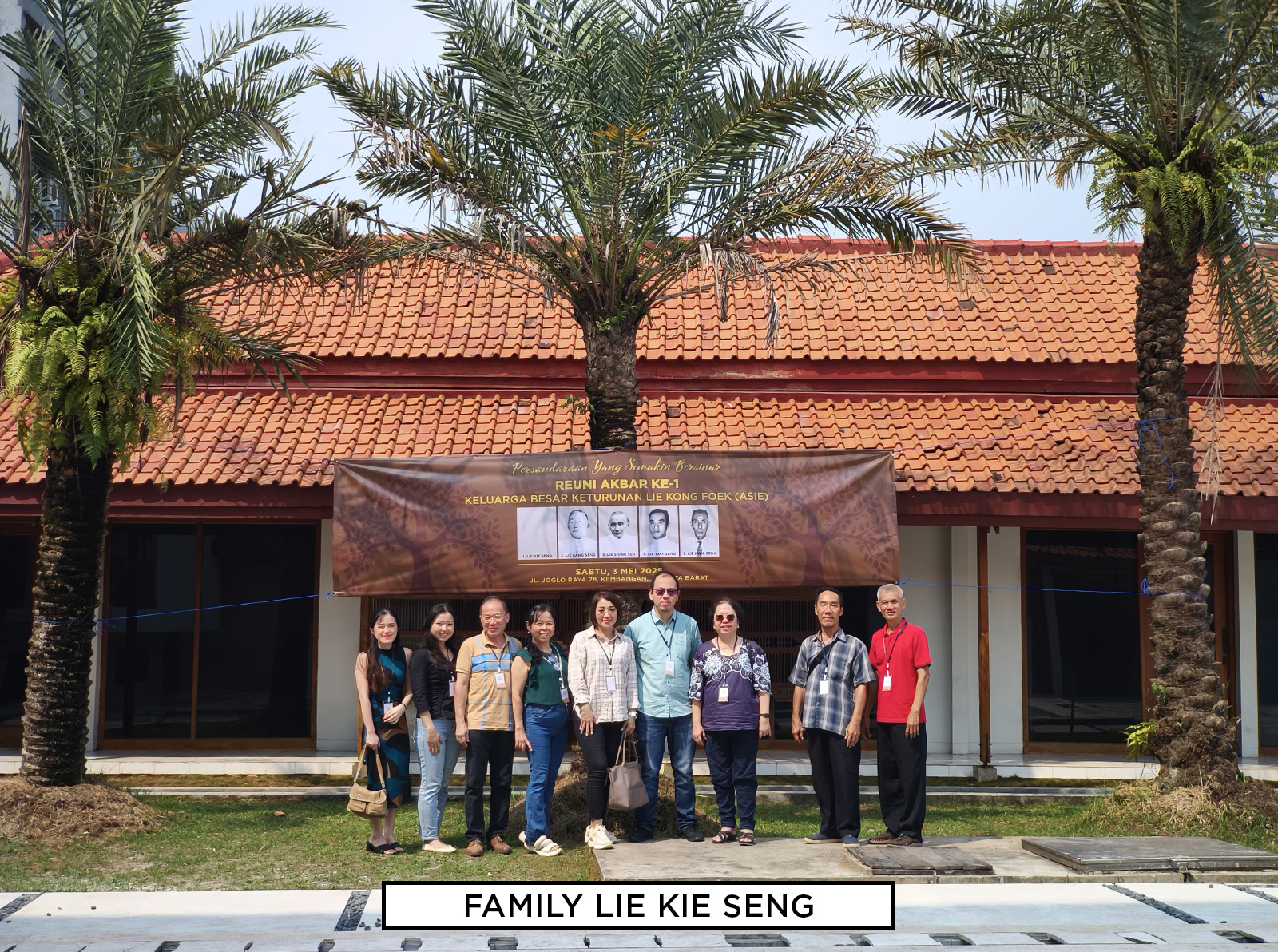
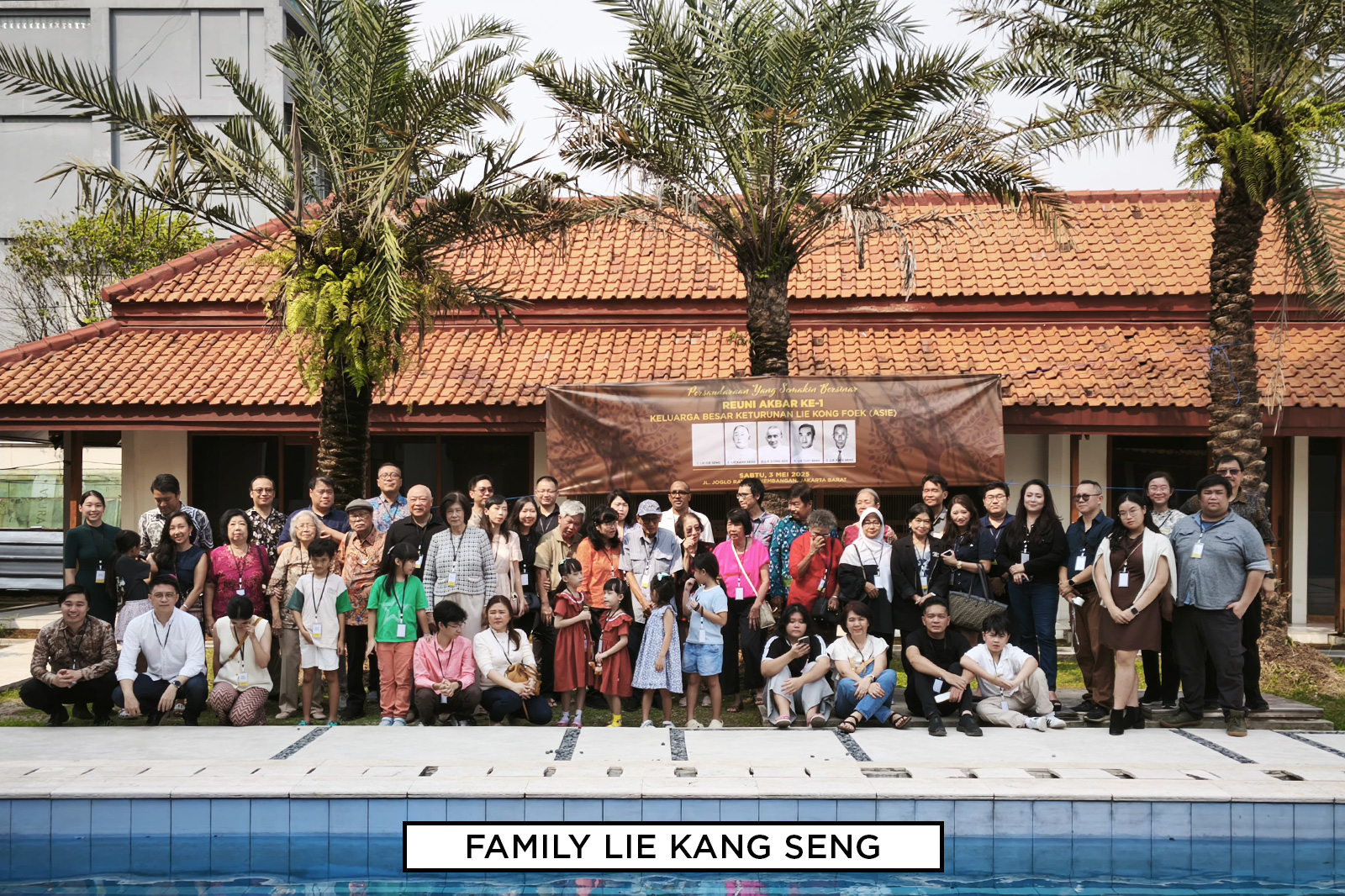
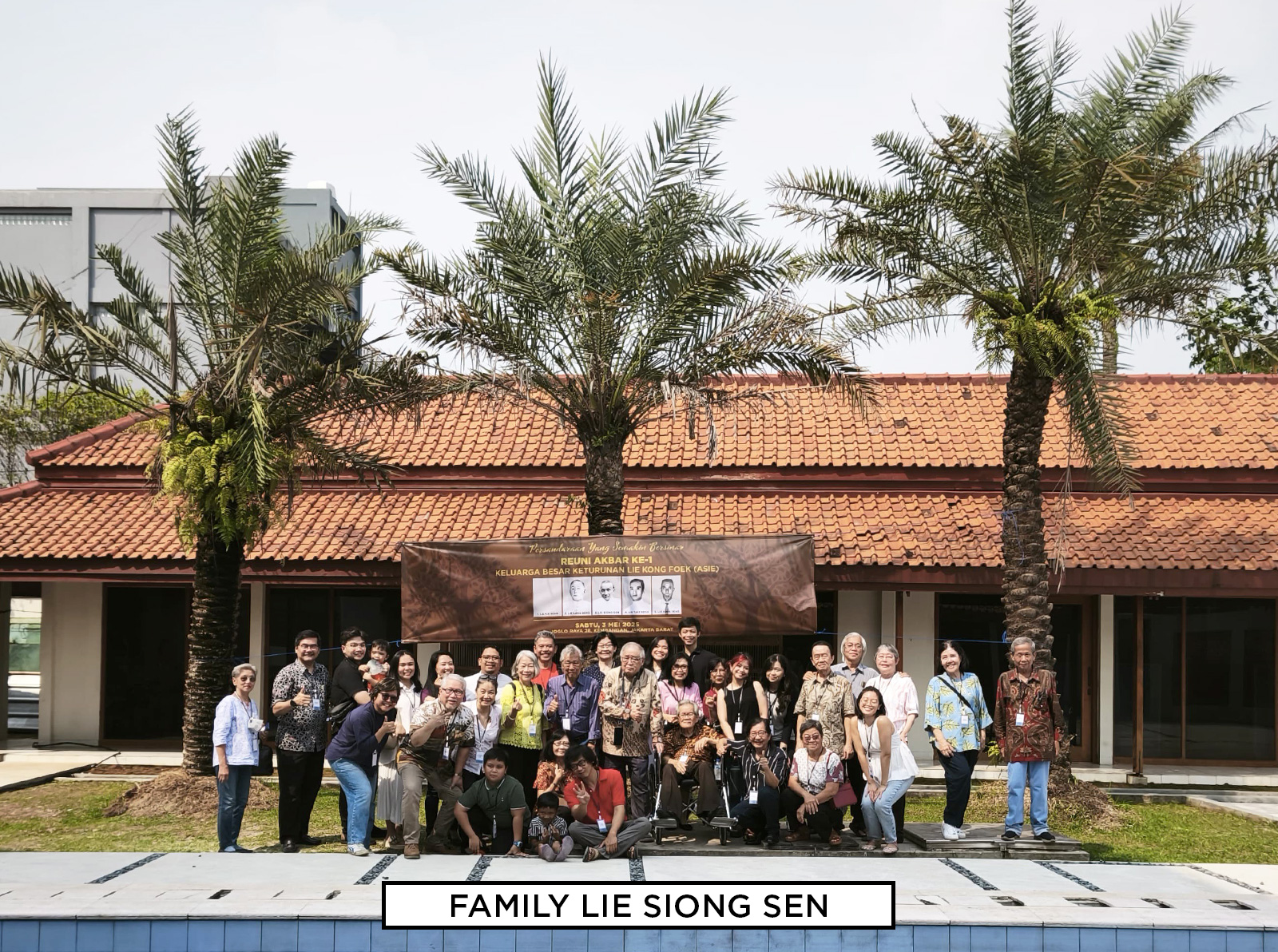
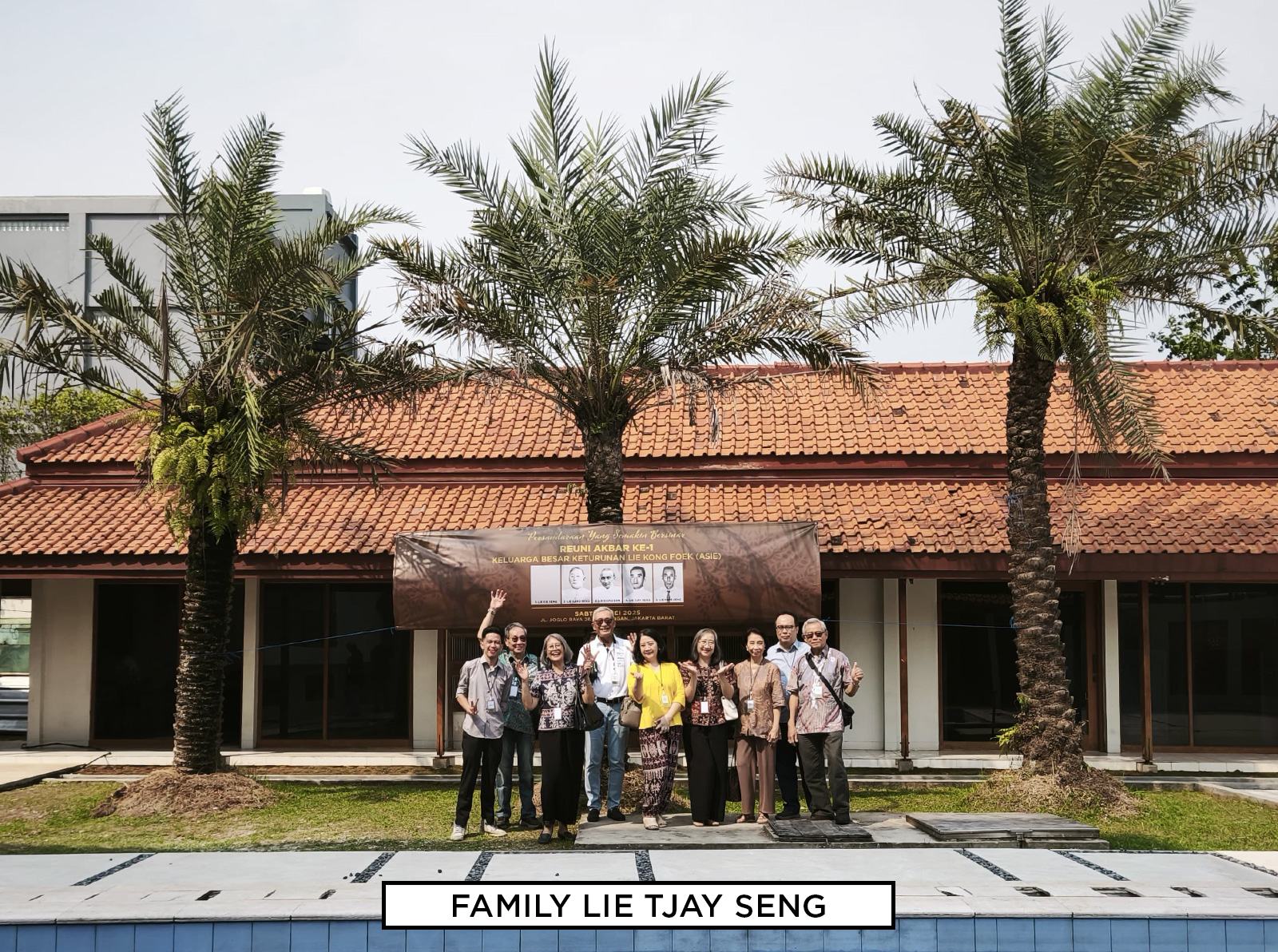
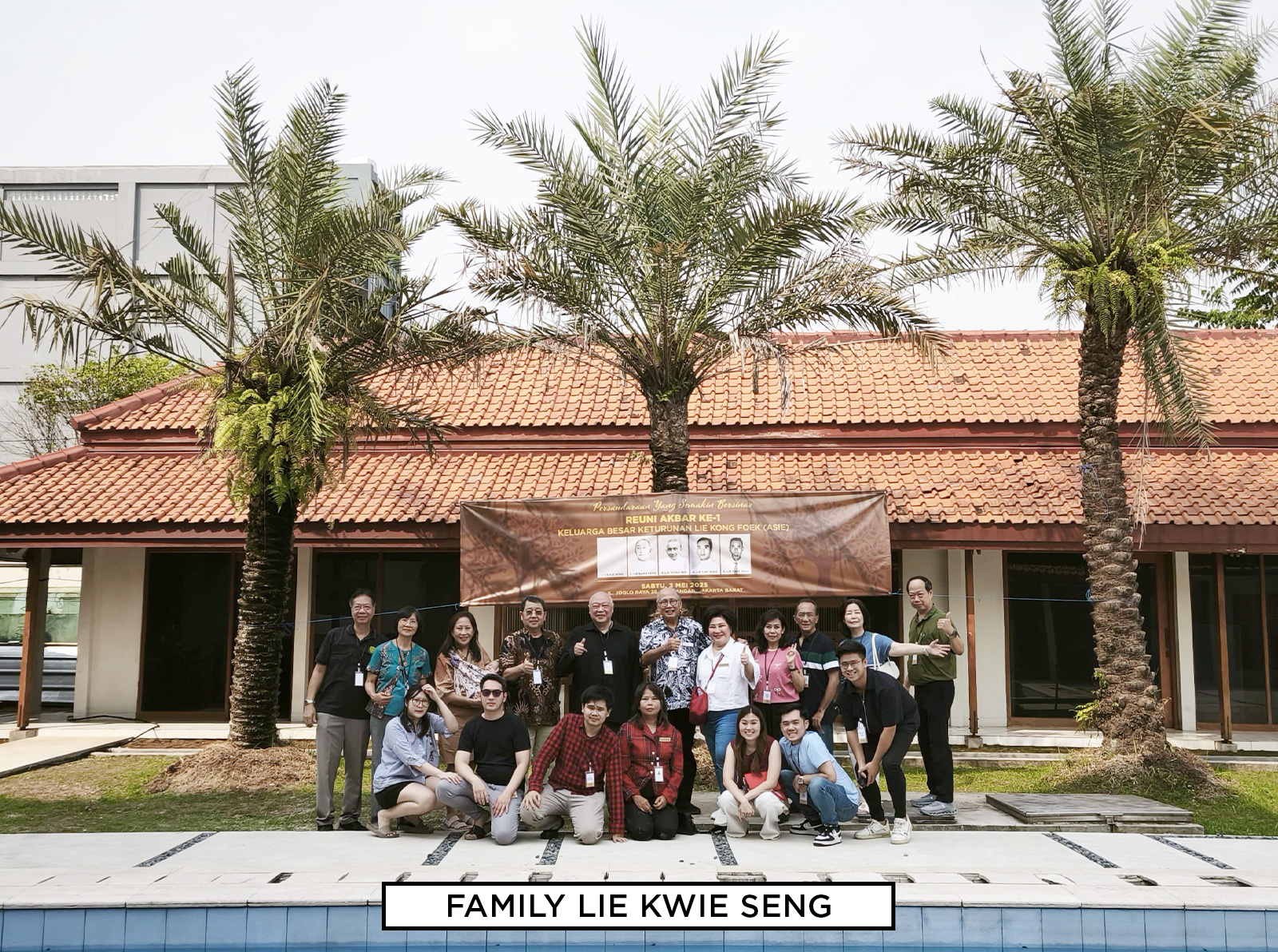
Photo above: The first Big Lie Family Reunion (Starting from the descendants of Mr. Lie Kong Foek) held on 03 May 2025 in Jakarta, Indonesia.
Estimate that the total number of family members from the 4th to 7th generations, descended from Mr. Lie Kong Foek (Asie), is now close to 1,000 people, living both in Indonesia and abroad.
ABOUT MRS. DIH HUI'S SIDE :
Mrs. Dih Hui spent her adolescence at Jalan Hegarmanah Wetan 24, Bandung. She lived there until she got married to Mr. Suwandi Muljadi in 1981, and afterwards moved to Jakarta.
Mrs. Dih Hui’s father, the late Mr. Dih Kuang, was a talented optician who opened BRAGA OPTIC on Jalan Braga, Bandung, and operated it from 1960 to end of 1970. He was also a self-made mechanical engineer who designed and produced many laundry machines and other kinds of high quality machines and metal works locally in Indonesia throughout his life. Mrs. Dih Hui’s mother, the late Mrs. Lie L.N., was a housewife who would sometimes engaged in various successful retail businesses during her lifetime.
Mrs. Dih Hui’s maternal grandparents, the late Mr. Lie Tjiaw Yo and the late Mrs. Yap Kie Nio, had 15 children, several of whom
have passed away due to age or other causes — including Mrs. Dih Hui’s mother, Mrs. Lie L.N. Many of their children, grandchildren,
and great-grandchildren and all their spouses and family members of all levels have become prominent businessmen and businesswomen
and company executives, engaged in investments, majority ownerships, businesses, managements, manufacturings, industries, operationals,
and professional careers both within Indonesia and internationally — including, but not limited to:
• Finance (banking, non-banking, investment)
• Property development (high-end and mid-low residential, commercial and office, office building, malls, shophouses, industrial factories/workshops/warehouses)
• Provision of building materials, interior design, and furnishing
• Golf course ownership and operation
• Education (kindergarten, primary school, secondary school, and university — bachelor’s, master’s, and doctoral degrees)
• Hospitality (5-star hotels, serviced apartments)
• Retail (department stores, hypermarkets, retail jewelry, retail men’s and women’s fashion, body care)
• OEM/private label apparel and jeans manufacturing supplier
• Food & Beverage (products and services: online and offline shops, restaurants and coffee bars)
• Plastic injection moulding
• Industrial chemicals
• Industrial and commercial laundries
• Architect bureau
• Politician
• High Profile Executive Director in international corporation
Some available/useful links:
01. Lippo Bank (now part of CIMB Niaga) : https://cimbniaga.co.id/
02. Nobu Bank : https://www.nobubank.com/id/
03. Ciptadana : https://www.ciptadana.com/
04. Lippo Village at Karawaci : https://lippovillage.com/
05. Lippo Cikarang : https://www.lippo-cikarang.com/
06. Lippo Malls Indonesia : https://lippomalls.com
07. Imperial Golf Karawaci : https://aryaduta.com/en/wellness/ikg#
08. Hope Academy : https://hopeacademy.sch.id/
09. Sekolah Pelita Harapan : https://sph.edu/id/halaman/
10. Universitas Pelita Harapan : https://uph.edu/id/
11. Pullman Hotel at Jl. MH Thamrin : https://pullmanjakartaindonesia.com/
12. Aryaduta Hotel : https://aryaduta.com
13. Wisma Nusantara Office Building at Jl. MH Thamrin : https://wismanusantara.com/
14. Dynaplast : https://dynapackasia.com/
ABOUT OUR CO-FOUNDERS' ANCESTORS/LINEAGE
Timeline of Chinese Dynasties:
• Xia (夏) Dynasty (2070–1750 BC)
• Shang (商) Dynasty (1750–1046 BC)
• Western Zhou (周) Dynasty (1046–771 BC)
• Eastern Zhou (周) Dynasty (770–256 BC)
• Warring States Period (475–221 BC) (within the Eastern Zhou Dynasty)
• Qin (秦) Dynasty (221–206 BC)
• Han (汉) Dynasty (206 BC – AD 220)
• Three Kingdoms Period (220–280 AD)
• Western Jin (西晋) Dynasty (266–316 AD)
• Eastern Jin (东晋) Dynasty (317–420 AD)
• Sixteen Kingdoms Period (AD 304–439)
• Northern and Southern (北南) Dynasties Period (420–580 AD)
• Sui (隋) Dynasty (581–618 AD)
• Tang (唐) Dynasty (618–690 AD, 705–907 AD)
• Wu Zhou (武周) Dynasty (690–705 AD) (interruption within the Tang Dynasty)
• Five Dynasties and Ten Kingdoms Period (907–960 AD)
• Northern Song (北宋) Dynasty (960–1127 AD)
• Southern Song (南宋) Dynasty (1127–1279 AD)
• Yuan (元) Dynasty (Mongolian-led) (1271–1368 AD)
• Ming (明) Dynasty (1368–1644 AD)
• Qing (清) Dynasty (Manchurian-led) (1644–1912 AD)
ABOUT MR. SUWANDI MULJADI'S SIDE :
HIS FATHER'S SIDE :
ZHENG/THE (郑) surname was one of the "Seven Great surnames" of seven noble families between whom marriage was banned by law by Emperor Gaozu of the Tang (唐) Dynasty.
In 806 BC, King Xuan of the Western Zhou (周) Dynasty, granted the ancient state of Zheng to his younger brother Prince You – posthumously known as "Duke Huan of Zheng (郑桓公)". Duke Huan's son, Duke Wu, helped King Ping of Zhou establish the Eastern Zhou (周) Dynasty in present day Henan Province. His descendants and many people of the state later adopted Zheng (郑) as their surname (Many of whom were among the most notable, brave, and courageous in Chinese history during and or before the ruling of the Ming (明) Dynasty).
One of China’s great historical figure is of Admiral Zheng He (郑和) (born Ma He 马和). He was a member of Hui Ethnic Community in Yunnan Province and was world famous for his Great Armada of Treasure Fleet / Seven Expeditions to the Western Oceans (1405-1433). The surname Zheng (郑) was bestowed on him by Yongle Emperor Zhudi, the 3rd Emperor from Ming (明) Dynasty to reward, respect and honour him for his great loyalty and contribution and bravest military performance achievement to the Emperor.
> To learn more about the history/origin of the ZHENG/THE (郑) family surname, please click on this link.
HIS MOTHER'S SIDE :
LI/LIE (李) surname has a deep and distinguished history in China, dating back to the Xia (夏) Dynasty. It originates from Gao Yao (皋陶), the Minister of Justice (Da Li 大理) under Emperor Shun. In ancient times, official titles were often used as surnames, and Gao Yao’s descendants adopted Li (李) from his title.
In a well known legend: one of Gao Yao's (皋陶) descendants, Li Zheng (李政), openly criticized the tyrannical Emperor Zhou of the Shang (商) Dynasty and was executed. His wife and son fled and survived among the ruins of the Yi tribe, living on muzi (plum) fruit. In remembrance, Li LiZheng (李立政) created the surname Li (李) by combining two characters for Mu (木) and Zi (子).
Later, the Li (李) surname was decreed/founded as an imperial surname by Emperor Gaozu of Tang (born Li Yuan 李渊) in 618 AD, used primarily by all the other emperors and their royal families, as well as noble clans closely associated with the court of the Tang (唐) Dynasty.
This tradition continued into the Ming (明) Dynasty, where the Li (李) surname may be bestowed to loyal officials or generals by the emperor as a rare honor for outstanding service — military, civil, or otherwise, spreading its use among the elite.
Thanks to its prestige due to its association with the then current ruling imperial family, the Li (李) surname attracted many people who were seeking to elevate their social status by adopting the surname. The Tang (唐) Dynasty also had an active cultural exchange, and many of the people in minority groups were given the Li (李) surname as part of their assimilation/integration into Han society.
Due to the many reasons above, we are not entirely sure how our ancestor, Zhen Zhu Gong received/got the Li (李) surname during the Ming Dynasty – Whether it was bestowed by an Emperor of Ming (明) Dynasty for a reason, or if he was adopted into a Li (李) Family, or if he simply adopted the surname for his own use.
Today, there are approximately 92.76 million people in mainland China alone who share the same surname, and over 100 million worldwide including China.
> To learn more about the history/origin of the LI/LIE (李) family surname, please click on this link.
ABOUT MRS. DIH HUI'S SIDE :
HER FATHER'S SIDE :
DI/DIH (狄) surname is rare even during the imperial dynasties of ancient China.
Mr. Suwandi Muljadi's wife, Mrs. Dih Hui (狄花), shares the same chinese character (狄) surname (according to traceable records)
as some notable figures/people in the past such as:
• Di Renjie (狄仁傑)– Better known posthumously as "Duke Wenhui of Liang", was a renowned magistrate and judge at the Tang court, as well as
a prominent statesman during the reign of Empress Wu Zetian. He served twice as Chancellor and is remembered as one of the most celebrated
officials of the Wu Zhou (武周) Dynasty.
• Di Qing/Ti Ch'ing (狄青)– A distinguished military general of the Northern Song (宋) Dynasty. He led successful campaigns against
the Western Xia and suppressed the Nong Zhigao rebellion in Guangxi.
> To learn more about the history/origin of the DI/DIH (狄) family surname, please click on this link.